1554 visitors have read this article.
Live update
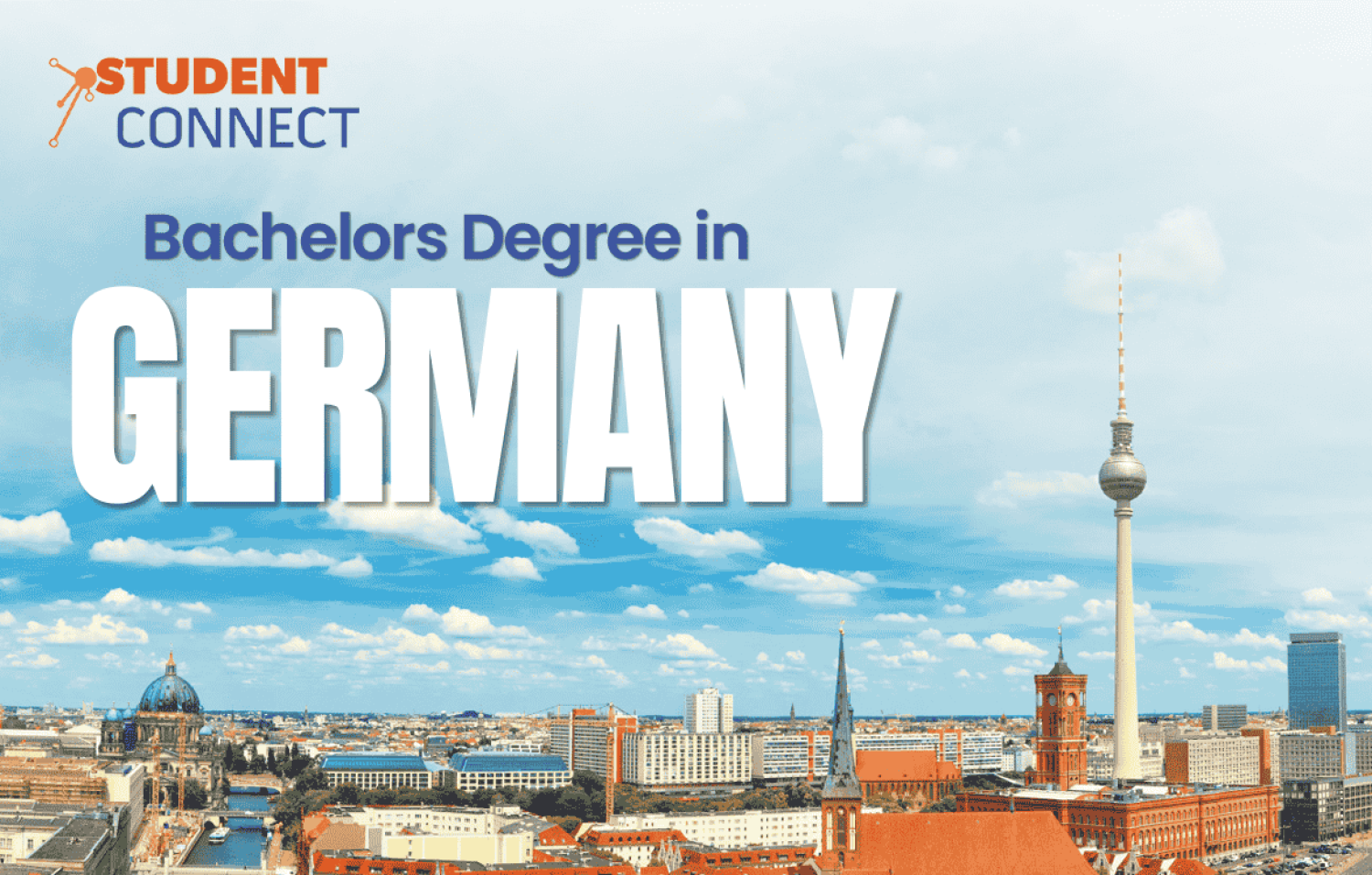
Every creation and creator has to start from somewhere to bring out ideas, innovation, and talks. Academically, students can start with a bachelor degree in programs of their dreams. To make those thoughts of being great come true, students can pursue a bachelor degree in Germany. The demand to study in Germany is collectively getting high due to advancement and low cost. Studying in Germany offers a structured academic environment, a robust economy, and significant post-study work opportunities.
On this page we will talk about the key aspects of studying for a bachelor degree in Germany along with program structure and language options for international students. We will even go through the steps and eligibility criteria to apply for bachelor degree in Germany.
Germany is best known for its commitment to academic excellence, research-driven institutions, and public universities that charge minimal or no tuition fees—even for international students. Additional benefits include:
Most of the bachelor degree programs in Germany take three to three-and-a-half years to complete. These programs are designed to offer both theoretical and practical knowledge to their students. Study formats include:
Curricula are usually modular, with credits assigned under the European Credit Transfer System (ECTS). A full-time student must complete 180–210 ECTS credits to graduate.
English-taught bachelor's degrees are particularly appealing for international students unfamiliar with German. These programs are primarily available in fields such as
Language requirements:
Applicants must provide proof of English proficiency via standardized tests such as IELTS, TOEFL, PTE or equivalent.
The majority of bachelor’s programs in public universities are conducted in German. Choosing a German-taught program provides broader course availability and access to state-funded education.
Language requirements: Applicants must prove their German proficiency through exams like TestDaF and other German language proficiency tests.
Your admission to a bachelor’s degree program at a German university depends on the recognition of your secondary education credentials. Students must have the following:
The following documents are generally required for bachelor’s degree applications:
All documents not originally in English or German must be officially translated.
Identify suitable programs by reviewing the curriculum, language of instruction, tuition policies, and specific admission requirements.
Contact university admissions offices to confirm whether your qualifications are recognized in Germany.
Gather and notarize your academic documents. Ensure all required test scores and translations are available before applying.
Apply the form from the university portal or take the help of your consulting institution to avoid any misinformation.
Once submitted, applications may take several weeks to process. If accepted, you’ll receive a Letter of Admission (Zulassungsbescheid).
To apply for a German student visa, you must:
You should apply for a German student visa after getting an acceptance letter from a German university to avoid any mishappenings.
Following are the costs of studying in Germany. And please note that this is just an average evaluation for living expenses, as these expenses solely depend on the student and their lifestyle.
On average, students should budget around €850–€1,200 per month, covering:
While bachelor’s-level scholarships are less common than at the postgraduate level, some financial support options include:
Germany allows international graduates to remain in the country for up to 18 months after graduation to seek employment. With a relevant job offer, you can transition to:
Mastering the German language significantly increases your employability and integration into the job market.
So, what more is there to say about Germany and its education? Germany is affordable with quality education, making it the best choice for international students. The academic integrity and research opportunities are very nice in universities of Germany. Whether you choose a program in English or German, studying in Germany offers a strong foundation for both academic and professional growth.
To ensure you have a smooth preparation for studying in Germany, prepare your documents properly. As most of the work process is defined according to your documents. All to avoid hassle and make this journey to study in Germany for a bachelor's degree a proper ride, join us at Student Connect. We provide expert guidance to the students with proper future consultation. We will help you prepare documents and solve queries in every step of your journey.