610 visitors have read this article.
Live update
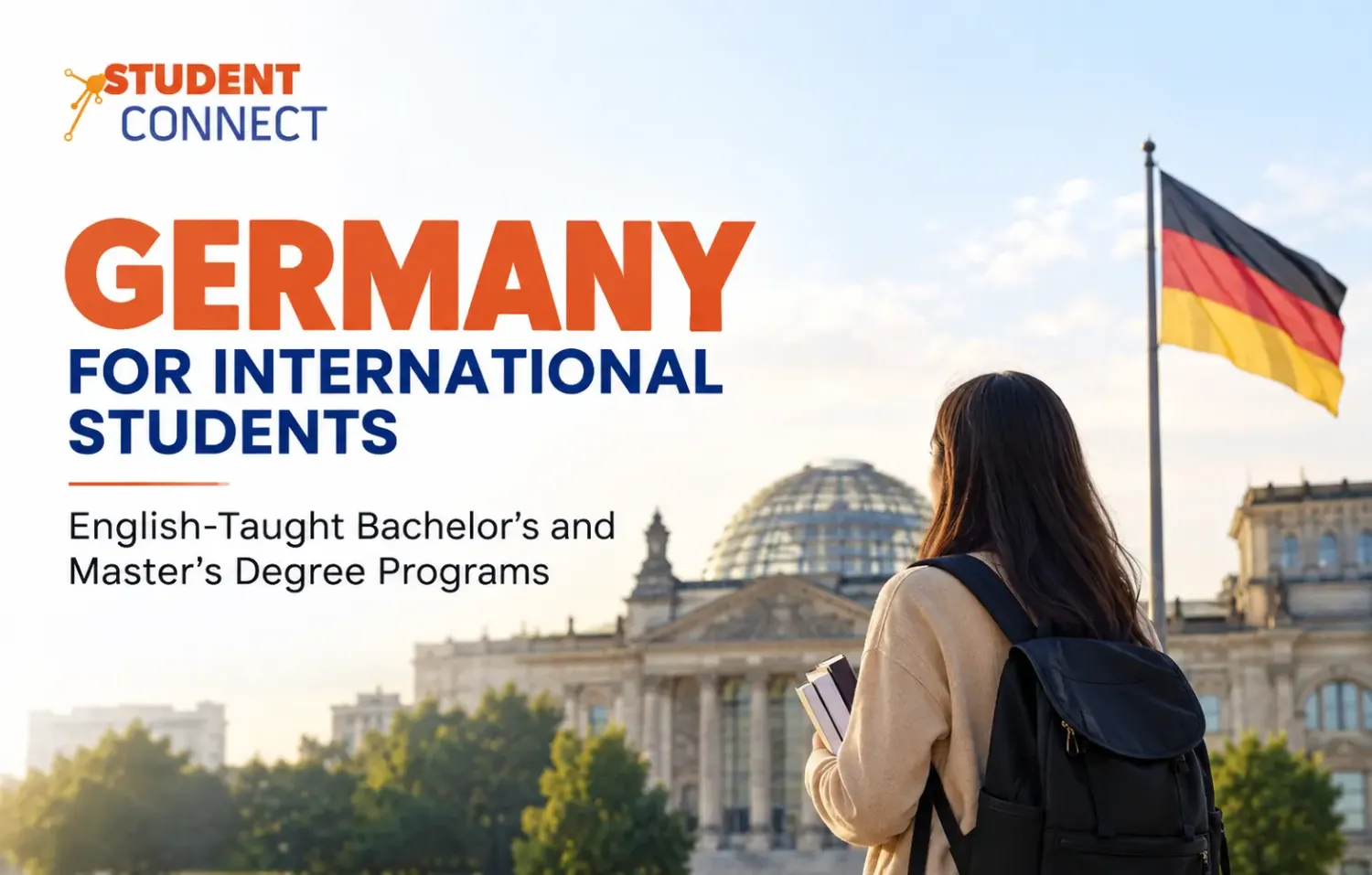
For students seeking high-quality higher education in English medium, Germany has emerged as one of the most attractive destinations for international students. The universities in Germany are making world-class education more accessible to students from around the globe with a growing number of bachelor’s and master’s programs taught entirely in English. Germany provides world class education, industry collaboration, world class research facilities, and university that is state recognized and provides accredited programs. The combination of affordable tuition fees, excellent career prospects, and a high standard of living, English-taught programs in Germany provide an ideal pathway for students looking to build a successful global career.
Being one of Europe’s most influential country, celebrated for its rich cultural heritage, historic landmarks, world-famous festivals, and strong traditions in art, music and literature Germany can be considered as one of the best country to study and live in. Germany is home to globally recognized companies such as BMW, Mercedes-Benz, Volkswagen, Siemens and SAP, which have played a major role in shaping industries worldwide. As a global leader in engineering, technology, sustainability, and innovation, Germany offers international students the chance to study in a country that actively contributes to advancements in science, industry, and economic development while preparing graduates for success in the global job market.
The demand for overseas students is steadily increasing in Germany. Approximately 420,000 international students and PhD candidates were enrolled in the 2025-2026 winter semester, while the number of international first-year students rose by 9% from the year before. The number of international students pursing Master’s and Bachelor’s degrees in Germany is increasing due to various reasons:
For a student to be eligible to study in Germany for a master’s degree, one needs a relevant undergraduate degree with matching course content that align with the chosen postgraduate program. The academic qualification and language requirements depends upon whether you plan to study in a public university or a private university. Some further requirements for the university are given below:
| Requirement | Bachelor’s | Master’s |
|---|---|---|
| Academic qualification | Completed Grade 12 / +2 | Completed Bachelor’s degree |
| Academic background | Relevant subjects may be required depending on the course | Usually a related Bachelor’s degree |
| Academic grades | Generally a satisfactory/good academic record | Minimum grade/GPA may apply depending on the programme |
| English-taught course | IELTS/TOEFL or equivalent required | IELTS/TOEFL or equivalent required |
| Documents | Grade 10 & 12 certificates/transcripts, passport, language certificate | Bachelor’s certificate/transcripts, passport, language certificate |
| Entrance requirements | Some programmes may have additional requirements | Some programmes may require specific credits, subjects, or other criteria |
| University admission | Must meet the university’s admission criteria | Must meet the university’s admission criteria |
| University | Language | Percentage | English Language Proficiency | Programmes |
|---|---|---|---|---|
| Private University | German language is not mandatory | Minimum 45% to 60% marks or equivalent | Overall IELTS score of 6.0 or 6.5 | English-taught programmes |
| Public University | German language is highly preferred | 4-year Bachelor’s degree with 70% or equivalent | Overall IELTS score of 6.5 or above | Programmes taught in German |
Germany is an attractive destination for international students from around the world as it offers a diverse range of programs taught entirely in English. Without needing prior German language proficiency students can pursue globally recognized degrees ranging from engineering and business to computer science, healthcare, and social sciences. These programs combine high academic standards, practical learning experiences, and strong industry connections, preparing graduates for successful international careers in an increasingly globalized job market. The range of programmes offered in Germany are:
| Computer Science & IT | Engineering Sciences | Business & Management | Teaching Degrees |
| Mathematics & Natural Sciences |
Language & Cultural Studies |
Humanities & Social Sciences |
Agricultural & Forest Sciences |
| Economic Sciences & Law |
Art, Music & Design | Medicine & Health Sciences |
Environmental & Life Sciences |
The courses that are commonly opted by the students are:
The master’s courses are listed below:
The bachelor courses are listed below:
Germany offers multiple intakes for international students, giving students flexibility to plan their studies. The main intakes are winter and summer, with winter being the larger intake and offering more program options. The intakes available are listed below:
| September-October-November (2026) | March-April (2027) | January (2027) | June-July (2027) |
|---|
In conclusion, Studying in Germany provides international students an opportunity to obtain a world class degree from an internationally recognized university while experiencing a dynamic and innovative environment. Germany has become one of the most attractive destination for higher education due to its advance curriculum, affordable fees, international exposure, post-study work opportunities, English taught programs and so on. The university in Germany has outstanding reputation throughout the world. The students not only benefits academically but also from exposure to a multicultural society and opportunity to have access to one of Europe’s strongest economy. For the students seeking world class education, global career opportunities, international exposure and networking, Germany is an ideal place to build a successful future.
For more detailed information you can visit Student Connect. We are here to guide you on every step of your study abroad journey.